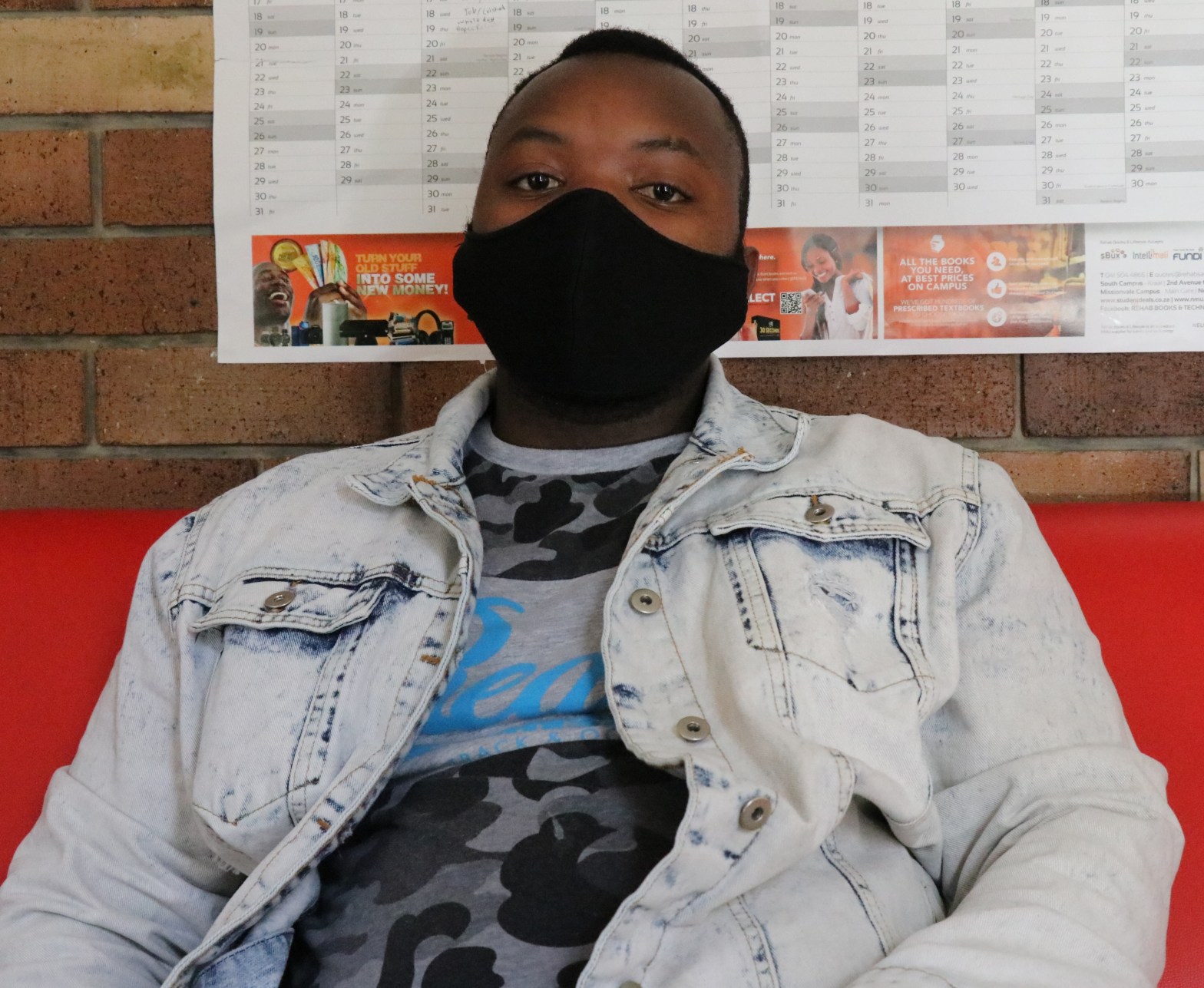
“She was admitted to Malizo Mpehla hospital and she then informed us that she had tested positive for Covid-19, so everyone had to test immediately now”. Xola said. By the time his family was notified, Xola had left his home in Tsolo for East London to visit his sister. because of this, Xola could not get tested with his family, he was tested in East London at the Frere hospital. The testing was a precautionary measure as well as he had now visited his sister and she was at risk of contracting the virus as well.
Because of this, he received his results a little later than his family back home. “Even though I did not have any symptoms, I still treated myself as somebody who is positive because I had been with my family members at the time of the news”. Xola recovered from Covid-19 during the month of June after he had quarantined at home in East London. It can take up to 14 days for a person with the virus to show symptoms, however, Xola did not develop any of the known symptoms of the coronavirus
The case of symptoms could be a threat to a person who could have interacted with somebody who has Covid-19. “I did not develop any symptoms, all I know is that I had a runny nose, which is a symptom I recently learned about”, Xola says during the face to face interview in which the safety measures were observed with caution.
The coronavirus is a communicable disease and if one interacts physically with a person that has the virus, then one is at risk of contracting the virus if precautions are not observed. The high number of active cases and deaths in the country can cause one to lose all hope when they find out they have been infected by the virus. The way of doing things and one’s daily life activities take a knock.
Xola said ”I had to self-isolate, I would get food by the door and no one came into my room, but this method assisted us a lot as no one else besides me had the virus at home until I recovered”. Stigmatisation is one of the issues that come about should one be diagnosed with having contracted the virus. On the question of how did he receive the news, Xola said “The biggest challenge about getting the virus is the anxiety because one does not know what to expect for the coming days but I had to be optimistic that I am going to recover successfully”. It is said that people who have recovered from the virus are treated differently in their communities once they have completed the self-isolation period and have fully recovered but Xola says he did not expect stigmatisation to not occur in the community.
Xola may have been safe from falling victim of being treated differently because he recently recovered from the virus but his mother back in Tsolo was not. “The stigma affected my mother mostly and she could not cope with the rumours that were going around of her having succumbed to the virus after doctors had visited our home to test my mother”.
Thembisile Nongampula, Deputy Provincial Chairperson of the Treatment Action Campaign in the Eastern Cape says there are lessons from the fight against HIV in South Africa, that can help when addressing stigma around Covid-19.
“One way of dealing with stigma is to use the same remedy we applied during our struggle with HIV/AIDS, the mobilisation of the community. As an organisation, we understand that the threat posed by Covid-19 is different because it is highly contagious and needs us to mobilise in different ways than what we are used to in fighting the spread of the virus.”
Xola told of how they had to deal with phone calls and text messages from community members wanting to confirm the death of his mother. “One person asked me if it was true that my mother was carried in a plastic bag when the doctors that had visited our home in Tsolo left”.
The bachelor’s in social work master’s student, Xola commands his family for being supportive during the time he, his mother, sister, and niece were trying to regain their immunity. “
I have a very supportive family who were constantly giving me advice, especially my sister who works at a hospital in Dutywa, she gave me recommendations on things that I needed to do for me to recover from the Virus”.
As things stand, there is still no vaccine or cure for the Corona virus pandemic but there are some recommendations that are made available to people to try out once they have the virus. Xola said he used Vitamin-C and Anti-biotic tablets while he was self-isolating and has recovered well from the use of those. “I treated this virus like a normal flu as I even used things like Med-lemon”. The local district quarantine zone and the wellness centre seem to have played a role in Xola’s road to recovery as he mentioned during the interview that he also contacted them advice on the available options he could use for him to recover well.
Xola who recovered from Covid-19 said for him awareness is something that the government of South African together with the Department of Health could investigate in the local clinics and hospitals. He said there was no form of guidelines from the clinic pertaining to how he should isolate himself while waiting for the results, he had to watch the news and read up a lot about the virus.
According to the National Institute for Communicable Diseases, the number of active covid-19 cases in South Africa in the beginning of 28 July 2020 was 452-thousand 529 and they continue to grow daily.
References
- Department of Health. (2020). Covid-19 Statistics in South Africa. Available: https://sacoronavirus.co.za/. Last accessed 28 July 2020.
- Luvuyo Mehlwana. (2020). COVID-19: The battle against stigma in the Eastern Cape. Available: https://www.spotlightnsp.co.za/2020/05/07/covid-19-the-battle-against-stigma-in-the-eastern-cape/. Last accessed 28 July 2020.
It’s in your hands…
 Victor Phemba