
Water your plants while praying for rain
Unknown
Be yourself; Everyone else is already taken.
— Oscar Wilde.
The new age
Water your plants while praying for rain
Unknown
Be yourself; Everyone else is already taken.
— Oscar Wilde.
Financial freedom in a country where almost one out of every two people above the age of 18 fall below the upper-bound poverty line may sound unattainable. According to STATS SA, in a report filed on the 13th of August 2020, these are persons who spend R1 268 per month on food and non-food items. STATS SA’s Poverty Trends in a South Africa report that was released in August 2017, shows that a quarter of South Africans lived in extreme poverty in 2015. More than half the population (56%) was living in poverty as mentioned earlier. According to the report, the people most vulnerable to poverty in South Africa includes women, black people, especially those of the Eastern Cape and Limpopo, minors, and youngsters. According to an article published by fin24 titled Why South Africans struggle to save, this is due to the inherited riddled history of South Africa that the country continues to struggle with financial oppression, inequality, and financial illiteracy.
According to Rueben Arendse, a manager of the financial advisors’ department at Mutual Park’s Old Mutual “Earning money has become difficult due to unemployment and an increase in the cost of living due to reasons such as inflation”. If one is lucky enough to find employment and earn a salary, self-discipline is key to obtaining financial freedom.
Young people are often referred to as the leaders of tomorrow and therefore financial literacy and financial freedom for the upcoming generations depend on the information and the knowledge that the South African youth will carry through the coming years.
Financial literacy for the youth
To understand financial literacy means that you are very well on your way to financial freedom. First things first, what does it mean to be financially free? Joanelle Smit, a director who has been offering financial advice and investment services to clients at Spectro Plan BlueStar, a Sanlam entity since the year 2019 defines financial freedom as a state in a person’s life in which you have enough savings, investments, and cash to afford a lifestyle that you may wish for yourself and for your family. This does not mean being rich or having huge amounts of money saved up for ‘rainy days’ but knowing how to manage your finances and having enough when needed.
This now leads to financial literacy, which is better defined by Jason Fernando who is a director at Voyager Holdings. In an abstract titled What is Financial Literacy by Jason. Fernando, financial literacy can only be claimed when one is able to understand and use various financial skills, such as personal financial management, budgeting, and investing.
Being financially illiterate can lead to several pitfalls, such as being more likely to accumulate unsustainable debt burdens. This in turn can lead to poor credit scores and bankruptcy.
Thankfully, there are now more resources than ever for those wishing to educate themselves about the world of finance. One such example is getting a bank that charges you less and offers more than just banking but a range of free learning resources or articles to help you be savvy with your finances. However, to be savvy with your finances may mean that there should be some source of income. This now becomes a challenge for most youngsters in South Africa, especially those who are juggling academics and their social life, finances may prove to be a handful. The problem is not, although a contributing factor, having a source of income but financial literacy.
Since financial literacy must have an effect in one’s financial freedom, which in turn frees you from financial stress and off-balance spending. Wouldn’t you want to get in on that kind of a cool culture of money? Not having to wonder where your next meal is coming from or if your bank will approve your loan? This way of living could reduce debt and have your needs met easier.
Being financially free enables you to have many options, you are never without money. This may be how you achieve that…
Here are ways to achieve and attain financial freedom:
Information on how to budget or save money can be accessed at a bank branch while you are shopping for the best bank for your needs. All banks are keen to give out the information as they will be trying to win a new client over, and that in this case will be you.
Financial stress can be a waking nightmare for young people, and it can be a huge factor in talented students dropping out of varsity or slipping into depression. Financial literacy should be compulsory for young people, especially students. Financial freedom can be attainable, and it can be achieved through passive profit. “Passive profit is what you have after your fixed expenses have been paid. It means you still have enough money to live comfortably.” said Joanelle Smit.
Water your plants while praying for rain…
unknown
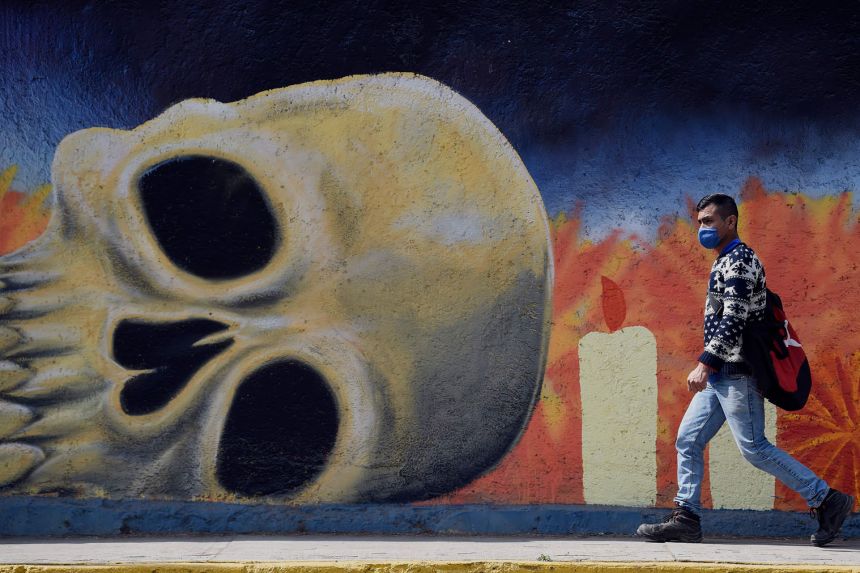
It is unfortunate Covid-19 has not only robbed people off their lives, but it has also taken good journalism away from the public, including jobs. A tragedy that sees both tragedy and discouragement for the youth of South Africa who are still searching for jobs. According to Statistics South Africa, employment statistics published on June 29th 2021 show that total employment decreased by -0.1% adding only 644 more people to the count.
The South African media is regarded as the watchdogs for the society and is used as a tool to keep those in power, such as the state under a sharp eye and try to ensure transparency between them, the state, and the people. This was ensured by the arrival of freedom, otherwise known as democracy in South Africa in the year 1994. This was the era in which news were shared strictly via newspapers and community radio stations. Since the arrival of the rapidly spreading virus, this role of the media has shown to take a fall. You will be sure to find out about this as this passage goes on.
Serving as watchdogs was not the only job that came with democracy in the country’s media, but social and developmental purposes were met too. This meant that print media could advertise developing businesses and promote upcoming individuals by sharing their stories of success such as athletes competing on big stages of tournaments and coming out as winners of those tournaments. A question which one would ask is what is meant by social and developmental, and do the media still serve this purpose? Mass communication within the country has changed. Since March 2020, news has been about the now faced covid-19. There are few to no fresh stories about the citizens of South Africa and other factors that affect their lives.
Differences according to class have also ensured the limited news in public owned newspaper and magazine outlets, known as community media and private media seems to be seeing a rise in stories on people and business advertisements. Herman Wasserman who works with the center of film and media studies in the University of Cape Town wrote that private media, known as commercial media, serve largely elite audiences and are therefore more likely to produce a news agenda that is of interest to those who can afford access to commercial media, or who are attractive consumers for advertisers. This surely speaks with a very high-pitched voice that government has played a part in ensuring the “equal rights” that were supposed to come with democracy are exercised by everybody and fairly, right? The commercial and community media will surely make one realize this is not the fact. That voice is screaming in the ear, very closely
“Social constraints are here to stay”.
This is a term that came with the Marxist theory that meant that society has been organized in the way that others, the audience of the community media in this case have to labor for the elite but only to end up with the kind of media that does not offer any other news but depressing news about deaths due to covid-19 and the many lockdown levels that the country plays a game of tag with and how these lockdown levels always result in one more family being left to figure out their next meal. Once again, remember that high pitched voice.
What has set a trend in community media is that news gathering has been more based on social media. Checking of facts and verifying the story have seemingly become forgotten elements of informing the public. What people share on social media today is what journalists and media houses depend on and with this, a lot of incorrect and biased information is shared, such as the big story of the decuplets that ended up with an instruction of a lawsuit against Piet Rampedi and the Independent Media. The stem of this is how covid-19 has been made the center of all news within the country South Africa. Of course, Rampedi was trying to come up with something fresh that would probably distract the country from covid-19 and its never-ending lockdown levels. But in doing that he just had excited the country with misinformation and credit must also be afforded to social journalism, the telling of stories by the public on social media platforms, because the decuplets story spread quickly more especially on twitter.
To me, the biggest crime that Covid-19 has committed against South African journalism would have to be how it has left journalists hard focused on hard and breaking Covid-19 news and as such, t they have lost their touch on feature writing, the mere concepts of writing being to give facts after having researched on a topic. What was the rush for the story to get published without proper research? “First one across the line claims victory”? We are not playing politics here really.
It is unfortunate that big media houses such as Caxton and Media24 must shut down a few of their publications and all this is because of the crimes owed to Covid-19 in South Africa. The watchdog duty is fading with almost each story published. Some media houses are moving online and therefore newsrooms are becoming smaller as departments are being centralized. Others are only loyal to the governing party, the ANC and therefore do not necessarily serve the public with what they would like to hear about, what exactly happened to the R500 Billion Rand for instance. This is a story for another day altogether.
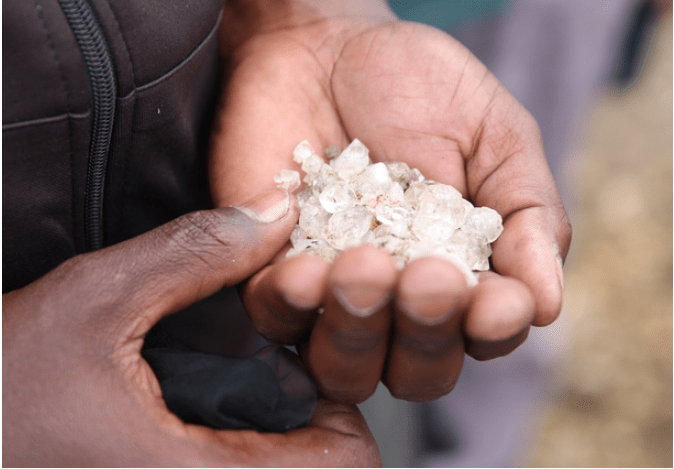
Residents of kwaHlathi have been involved in a 21st century diamond rush after posts appeared on social media alleging that the hills around Ladysmith, KwaZulu-Natal were teeming with precious stones.
Their hopes were dashed when an expert confirmed that the precious stones were not diamonds. This is according to Ravi Pillay who is the MEC of Economic Development in KwaZulu-Natal.
KwaHlathi turned into an overnight attraction. Everybody living in and around Ladysmith, was looking to make a big score on the new discovery of what they thought were diamond stones.
According to an article published by the Independent Media, the shiny stones were discovered by a herdsman who spotted one while he was watching his cattle in the veld. The herdsman who was identified as Dwayne Maskutule kept what he had seen to himself until last month, May when he told his friends about it and that is when everybody wanted to get their hands on the big discovery as well.
In social media platforms such as Twitter, Facebook, and YouTube, the locals are visibly seen on various pictures and videos digging up the shiny stones with their home equipment with each one trying to make a discovery as big as there could be.
The large number of people who went to dig at the hill can be seen clustered together without wearing face masks or observing social distancing which are some of the regulations in line with the covid-19 protocols.
The people of kwaHlathi have started to envision their lives and wishes finally coming to fruition when the stones were discovered and a video of a man calling home and already making promises to his family, saying that they would be going to eat in Dubai. The man is clearly heard saying words such as “ubaba usewinile” which translates to daddy has won.
Twitter went viral when a video was shared by @TheBlackspice [1]and on the video residents are clearly seen using home tools to dig up the newly discovered precious stones. With the stones being declared as non-diamond, the masses on twitter were still behind the people of Ladysmith and kwaHlathi telling them to keep the stones until they have enough money to verify the stones themselves and should not trust any government officials.
This week of the 13th of June, the #diamondrush trended on Twitter after a group of geoscientists and government officials that were sent to kwaHlathi declared the shiny stones to be only quartz. The public would not take it, out of rage @ProfMahlangu twitted.
Breaking News: Government act of 1986 by the Queen & amended by London ANC in 1995 has been unleashed o our people. ANC sent rats to say it’s not diamond but stones. Same government that doesn’t know about 10 babies. Don’t trust them, return nothing. Keep those stones #Diamondrush.
Quartz crystal are mineral shiny stones that are found on the earth’s continental crust, and they consist of silicon and oxygen, and this is according to an advertisement by Fire Mountain and Beads on their online store. These crystals are priced higher than other crystals, but they may vary according to the location where the crystal was discovered or made. The most recent use of quartz crystals is in the making of oscillators for time pieces including electronic devices such as computers and GPS equipment. Quartz crystals are what has enabled many people to experience and enjoy the benefits of wireless communication and according to Ramon M Cerda who wrote Understanding Quartz Crystals and Oscillators, wireless communication would not be possible without crystal-controlled transmission.
@Hlabirwa took to twitter to encourage the people of kwaHlathi to not lose hope with his tweet: Quartz crystals are still valuable nonetheless;
they are used in watches. Its not a train-smash #Diamondrush.
Following the declaration of the shiny stones as quartz crystals, according to Independent Media Maskutule, the herdsman who made the first discovery of the shiny stones has been relieved off his herding duties by his employer and is now in hiding as he fears for his life. His employer has also said the people of kwaHlathi, and Ladysmith have been coming to his home to look for Maskutule trying to force him to take them top the site where he said he discovered the diamonds on.
The kwaHlathi residents may have not found diamonds on the hills of their homestead but they may have found a way to advance South Africa in the manufacturing of digital devices and watches.
[1] https://twitter.com/TheBlackspice/status/1404030764778467328?ref_src=twsrc%5Etfw%7Ctwcamp%5Etweetembed%7Ctwterm%5E1404030764778467328%7Ctwgr%5E%7Ctwcon%5Es1_&ref_url=https%3A%2F%2Fwww.iol.co.za%2Fnews%2Fkzns-apparent-diamond-rush-in-ladysmith-a-concern-for-government-9687889e-d457-5d91-a176-dd59cc71d90e

A published author, public speaker, and a YouTuber, Zizo Apleni has been a motivation for many rape victims as she speaks freely and fearlessly about her past where she was raped and impregnated by her biological father when she was thirteen years old, and how she managed to get through that and finally forgive her father.
Living in a home where a father is sexually abusive towards his seven-year-old daughter is a reality That Zizo Apleni had to face. Zizo’s father, who cannot be named in this article due to his unavailability to give consent raped his daughter in the year 2001 when she was just seven years old doing her first grade in Komga junior school. Zizo was abused sexually by her father until she turned thirteen in the year 2007 and she fell pregnant that year. “I could not talk to anybody about it as I did not understand what my father was doing to me because I was young” Zizo said.
Zizo grew up in iDutywa, being raised by her grandmother until her father requested that she moves to Umtata with him for better schools and would rape her each time her stepmother was not home. Zizo’s biological mother noticed changes in Zizo’s physical appearance as she had lost weight within the first year of living with her father and had her enrolled into a school in Komga. The rape incidents continued even after Zizo had been enrolled into Komga junior school and would visit her father between long weekends and school holidays. “I visited my father sometimes and that’s when the raping would still happen” Zizo said.
Zizo’s inability to talk to anybody about what was being done to her by her father could have been influenced by other factors besides her being young and not knowing that her father was abusing her sexually. The topic of rape is still taboo in many circles (Sgroi, 1978) and therefore she could have easily been silenced by the first person she trusted enough to talk to about her being raped by her father because the story is too close to home. Zizo’s pureness and innocence are what got her the freedom she received from her father as he was trialed and convicted after the story of him raping her had come out.
After learning of the danger of falling pregnant as a teenager and the kind of abuse she was suffering because of her father, Zizo said she remembers the got home and told her father what their hostel master had told them he threatened her and said if she ever told anybody about what was happening between them nobody would love young Zizo anymore and that she would be an outcast.
The published Zizo recounts the time when she realized that what her father was doing to her was wrong, “It was at the time our landlady of the house I boarded in told us stories of what happens when girls get involved in sexual activities with boys and that is when I realized this is actually what my father is doing to me” she said.
The big step Zizo’s mother was to not keep what had happened to her daughter as part of the many family secrets that are kept in many families while children are being harmed by adult family members and as a result Zizo’s father was convicted for rape. This act was avoiding what Burgess and Groth describe as denying a victim effective intervention when crimes such as raping of a minor are not reported (Burgess & Groth, 1978).
Later in her life Zizo came to know that she was suffering from post-traumatic stress disorder and depression and these according to American psychiatric association can cause a person to suffer from what is known as borderline personality disorder where a person cannot stand or sustain inter-personal relationships and is caused by various reasons including sexual abuse (American Psychiatric Association , 2013). After realizing that her experience was affecting her mental health and romantic relationships, Zizo decided to finally face her father and start a journey of forgiveness as she felt it was what was holding her back and she has gone on to say that her faith in God is what got her through and made her even stronger.
After getting her freedom from the clutches of her past, Zizo has published her own book titled My father took away my innocence and has done public and motivational speaking in many events and in local schools around East London. She said the inspiration behind writing the book was to empower other rape survivors and let them know that it is possible to move past their experiences and come out stronger. Copies of Zizo’s book are currently being given out to pupils in schools and she said young girls who come up to her say they really feel she is making a positive impact in their lives.
Gender based violence is an act that seems to have been around for a long time within communities, and as reports on the news show, this act has not ceased but instead it continues to haunt many. Human rights’ months or days have not proven to change anything to better communities or cease different kinds of abuse on women and children. As the youth month commemorates the brave acts of young South Africans who took to the streets to demand better education, molestation of children and other forms of abuse are on the rise in the country and the public may soon need to take steps towards ensuring a safer and better country for children. According to crime statistics released by the South African police Services for the fourth quarter, sexual offense cases have gone down by -19.0% as compared to the year 2017 where rape cases that were reported were 71 and by March 2021 51 cases were reported.
Tsotsi who is portrayed by Presley Chweneyagae in the crime, drama that remains relevant to the life that South African communities are still striving under, Tsotsi sets such a spectacle for the viewer. With the photography and the way the camera work is done in the making of the movie, the viewer is able to feel closer to home and relate better to what is portrayed by the actors and or actresses in the movie. The sheeben life where locals dance until the late hours of the night. The thug life of teenagers who grew up under tough conditions.
Tsotsi finds himself under a tree on a very cold and rainy night after a fallout with his friend in Soekie’s sheeben. In his attempt to steal a car after a woman struggles to open her remote-controlled gate, Tsotsi shoots the woman (Pumla Dube who is portrayed by Nambitha Mpumlwana) and speeds away in her car. This act alone is what changes the teenage boy’s lifestyle of being a criminal as he brings the car to a sudden stop when a baby cries in the back seat of the car.
The discovery of a baby by an angry teenage boy, tangled up in his criminal ways takes the viewer’s mind to what is viewed as fruits of patriarchy and toxic masculinity. The carrying of the baby in a brown paper carrier bag, to the baby being pulled from under the bed covered in a colony of ants from the condensed milk the baby boy is left with in the paper bag, under the bed. This raises the opinion that that men do not know how to take care of children, which may be relevant in Tsotsi/ David’s case as he never received proper love and care from his father while his mother laid in bed sick.
The day-to-day lives of some South African communities is portrayed in the cinematography of this movie, from people residing in informal settlements (shacks), poverty, to alcohol abuse. What adds relevance even better is the music selection in the movie, the South African artists such as Zola 7 and Mafikizolo are just perfect for this of movie once again, more people related to the genre known as kwaito at the time. Kwaito music adds authenticity and the ghetto kind of life lived in the movie.
The movie Tsotsi was brought to screens for the first time in 2005 and we were taken into the life of a teenager whose feelings had ran cold owing to the kind of childhood he was exposed to in his home. With a drunkard as a father and mother sick in her bed, Tsotsi runs away from home as a young boy by the name of David and ends up living in a slum with his friend Aap who is portrayed by Kenneth Nkosi.
A production that originates from the United Kingdom has set many apart with views such as racism and mockery of the living conditions of some parts of South African communities. Even with these views, the style of writing and directing that Gavin Hood put when the movie Tsotsi was made deserves all the applause he has ever gotten for the movie. The distinction of the lives of those living in urban areas is clear when compared to those that are unemployed and are living in the informal settlement that the movie focuses mostly in.
A story of life and death, the movie Tsotsi starts out with the criminals from the shacks of Johannesburg planning out their usual acts of crime with Zola 7’s “guluva” pumping in the background. Tsotsi who is the ringleader that does not speak much, arrives at the train station with his partners in crime Aap, Boston (portrayed by Mothusi Magano) and Butcher (portrayed by Zenzo Ngqobe). After scanning the place with their eyes, man is followed, robbed swiftly, and stabbed to death in a train full of people.
With Tsotsi’s upbringing being a tough one, he displays hatred for anyone who raises their voice towards him, especially men. This he shows when he stumbles in a crown of commuters coming out of a train and he almost falls over Morris, a beggar who is crippled and bound to a wheelchair. This is given away by how he follows Morris into what looks like a well-lit below of a freeway and throws a stone at him to get his attention. A startled Morris offers Tsotsi his money that he had made for the day as he assumes that is what Tsotsi is after but at what is almost a slow-motion shot, Tsotsi kicks away the tin jar full of coins. After an exchange of words and throwing of stones by Morris to Tsotsi, Tsotsi pulls out a gun and the old man cries and utters “Now look what you’ve done… you’ve made an old man piss his pants” in what is called an Afrikaans taal between his cries.
Since the departure of the duo, Harvey Weinstein and Bob Weinstein who were the founders of Miramax, Tsotsi is the first movie release for the production.
Foreword
The terms “Slay-queens”, “blesses” and “Blessers” are what form the everyday talk of the town words to the South African youth, in communities and on social media platforms. What is exactly being discussed about the terms depends on the side that one is watching from. Those who are not involved or taking part in the acts of “blesser-blesse” or who are not “Slay-queens” view the acts as degrading and not worth what the “blessers” put their “blesses” through. As it can be imagined, the “blesses” and “slay-queens” of course share different views on the matter.
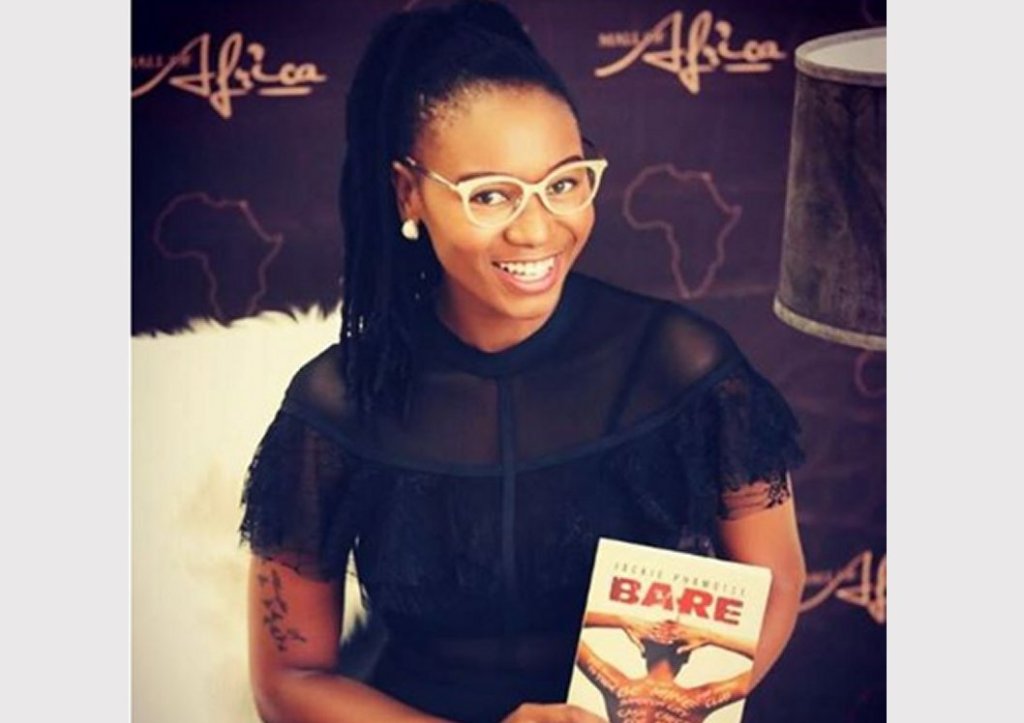
Having been exposed to the “blesser-blesse” life, author Jackie Phamotse has decided to take a heroic and an artistic approach in dealing with her life experiences while educating the young about what appears as “a good time” could be an experience that scares one for life. Although it may not have been easy, Jackie reflects some her life traumas in her Bare series with the purpose of helping the South African youth learn about how sexual transactions work and the dangers that come with wanting to have things the easy way in life.
Today Jackie Phamotse is the name that has been in the mouths of many South Africans, especially the youth after she had a live on her Instagram accounts talking about matters of sexual transactions and the “blesser-blesse” lifestyle.
The first part of the book series was published in the year 2017, with the publication of Bare: The Blesser’s Game. The book that received a thumbs up from the late Winnie Madikizela-Mandela and Mathews Phosa who went as far as to say, “The future of our literature is in this book.”
The inspiration to writing the five published novels for the 31-year-old Jackie draws from her and her family’s mistreatment from her father when she was young. A military commander who she does not name, was her father who especially mistreated his wife. Due to abuse they received from the assumed Mr Phamotse, Jackie’s mother later separated from her husband.
Having been introduced to the boarding school life, Jackie tells just how much her life had to change when she attended winter school in the Free State and ended up in a club. Just when she thought life could not get any harder for her, having survived her father’s ill treatment, at 17 years old, five men, together with the then minister of the former president Jacob Zuma’s cabinet raped Jackie. The Blesser’s game book paints a picture of “Treasure”, a character in the book who is gang raped in a club called Whispers in Bloemfontein. When she attempted to report the then minister, Jackie was told to let the rape case slide as she was fighting a losing battle.
In an interview on Your late mate with Nimrod Nkosi, Jackie acknowledges having thoughts running through her head that maybe she should not have gone to the club that day.
“You never know what is going to happen regardless of where you might be, even at work, something like this could happen” is what Jackie had to say about the night she was raped while se was still in high school at age 17.
Overcoming
In an interview with Viwe Konjwa who deals with matters of gender-based violence at Legal Aid South Africa, he mentioned that women and children suffer from gender-based violence due to men thinking that they are weak. This is evident in the number of cases that we hear in the news about how women and children are often kidnapped and found dead as to versus those of men.
Relying on therapy is what helped Jackie to not succumb to anxiety as she had to relive her past traumas. “Because I work with people such as the likes of Sbusiso “Dj Sbu” Leope, her business partner at MoFaya beverages who is extremely encouraging and level-headed, he really helped me through things”. Working out had been one of the coping mechanisms for Jackie as she tried to move on with her life and that is where her movement called Thick fit started from.
Jackie’s late teens – adulthood
After almost becoming homeless, Jackie left her home after the passing of her mother to seek greener pastures in the city of Johannesburg where her life experiences of working as a waitress in Sandton are again reflected in her Bare series. At the age of 19, Jackie’s waitressing job came with little to no knowledge of what the big city had in store for her. A young girl who is into playing sports and modelling, her life changes when a mutual friend invites her to a game of golf at the Bryanston county club.
After being introduced to the “blesser-blesse” life, Jackie’s life started to take a different direction that was confusing to her as well as unexpected events kept transpiring. Jackie had started to date a married man who later introduced him to his wife. “We dated for almost a year and I never knew this man had a wife”. This is what Jackie said during the interview.
The very first event that Jackie had to face was a forced abortion, or one that she had never consented into doing anyway, which makes all an illegal act. In South Africa the first Twelve weeks are the only space of time where a woman can request to have an abortion, this can stretch to Twenty weeks in an instance where the child or foetus poses a danger to the woman carrying it.
She describes a time where she fell pregnant and her “blesser” whom she would not mention by his real and is known as Tim in the Blesser’s game book drugged her and had hired a private nurse that came and orchestrated the abortion while Jackie had passed out from the drug. During this time, “Tim” could not care how far Jackie was I her pregnancy and there were not signs that the pregnancy was proving to be a danger in her life. “When I woke up the baby was gone. This happened at the Sandton Medi-clinic”.
After having lived a life under the eagle’s eye where the apartment that her blesser had bought for her was fitted with cameras everywhere to watch her every move, Jackie decided it was time she claimed back her own life and became her own self again. “Even my car and my cell phone were fitted with a tracker”, Jackie said.
The getting out got tricky when attempts on her life were made on reasons that the book she was to soon publish after leaving her “blesser” could contain things that are not meant to be known to the public. Jackie says at some point the house she lived in, in Rivonia Sandton was shot at and she then had to be moved to a safe house. Jackie mentioned that some of the secrets that the blesser “Tim” was worried about was the illegal organ dealings he was involved in.
The award-winning South African author, social activist, businesswoman, and philanthropist has been the voice for the many who are voiceless with her strong opinions on issues affecting woman and children. These issues range from rape, human trafficking, and even mental health issues affecting the Youth of South African today.
A bachelor’s candidate in his completion of matric in the year 2016, Luigi Vutomi Khosa decided he would study for a Bachelor of Science in Computer Science at the University of Limpopo in the year 2017. His decision was encouraged by his passion of wanting to merge artificial intelligence with a healthy lifestyle, making it easier for people to keep physically fit. He however dropped out in his first year after realizing the course was not as he had imagined. He then settled in the Nelson Mandela Bay and had to figure out a way forward. He has now created his own Luigi corporation website.
After years on registering and dropping out of different courses, Luigi ended up at Nelson Mandela University to study Bio kinetics in Bachelor of Human Movement Sciences because of his love for fitness and sport. The Limpopo-born later dropped out of Nelson Mandela University as well and decided to completely adjourn his studies and figure what he really wanted. “The reason was, my uncle was criticizing me saying, the career will only pay me peanuts,” Luigi said.
At 21, Luigi found his beat and that is when he created his own website which provides visitors with ideas on how to keep fit, from foods to eat and ways to physically train. He said he never had a dream of becoming a fitness trainer but his idea to become one was encouraged by an advice he got from a friend, Elvis Nzunga that made him realize his love for keeping himself fit and how he wants to help people keep fit. “I could see that Luigi likes running and it looked like it was keeping him in good shape, so I suggested he tries and make money out of this” Elvis said.
Luigi who has been in and out of different universities said he decided to revisit his first love by looking into online classes on programming during the South African lockdown that was due to what many have described as the “unseen enemy”, the Covid-19. “The website idea just came to me because I had started learning web design online just for fun.”
Because he is a young person who believes firmly in education, the website also has an educational side to it as he has included links that lead to textbooks and other useful things on the site. “I sell Fitness Workout Programs in different categories, I also advertise Herbalife products for people who are on Herbalife distributing team, in exchange for commission on sale for each product.”
After dropping out of the University of Limpopo, Luigi has launched his very own Luigi corporations website where individuals can sign up and enjoy tutorials on how to keep fit and get the types of foods they can eat.
“Fitness is the way I am wired” is what Luigi has kept stating during his responses to the interview questions.
The development of the website
The 21-year-old said he thought he could be productive during the lockdown period and therefore he started reading a book called “The 5AM Club” by Robin Sharma. “My life was about to change. I fell in love with his writing style, and I decided to finish the book.” He indicated that the reading of the book took longer than he thought it would take him to read and finish, but after having read the book he felt his life had been transformed. He recalls of a part in the book that speaks about having a schedule in life and so he developed his own and made sure he would stick to it, come rain or shine.
“Pain is what drives me” is simply how Luigi responded when he was asked what drives him. He further said he may not be rich yet, but his efforts and the amount of work that he puts in, makes him get closer to his goal.
The Limpopo-born said his website is based on helping people rather than making money from them. Having observed other fitness personal trainers, he feels they do not have an assessment for the person, which makes the fitness program not personal, and it does not speak to the person. “Since I just started my website, I have this challenge called ‘30-Day Squat Challenge’ where people get to participate for free and win a price, I pay them for being fit.”
Luigi was asked about ways of giving back using his website and where he sees the Luigi corporations website in a space of up to five years and his response just could not be ignored: “I would like to own a gym by that time, employing different trainers in our gym and fitness instructors. And I hope to expand and influence millions.”
Zukisani who has visited the website a few times was more than keen to attest to the efficiency of the website saying that he gives it a thumbs-up for a site that was only created during the period of the lockdown. “I thought it would lack in some areas such as ads and added links, but it seemed like Luigi wanted to disappoint me in that regard,” Zukisani, a trainee fitness coach at the Nelson Mandela University said.
Signing up on www.luigicorporations.com website is absolutely free. The individual also gets the privilege to receive a daily blog via email.
“She was admitted to Malizo Mpehla hospital and she then informed us that she had tested positive for Covid-19, so everyone had to test immediately now”. Xola said. By the time his family was notified, Xola had left his home in Tsolo for East London to visit his sister. because of this, Xola could not get tested with his family, he was tested in East London at the Frere hospital. The testing was a precautionary measure as well as he had now visited his sister and she was at risk of contracting the virus as well.
Because of this, he received his results a little later than his family back home. “Even though I did not have any symptoms, I still treated myself as somebody who is positive because I had been with my family members at the time of the news”. Xola recovered from Covid-19 during the month of June after he had quarantined at home in East London. It can take up to 14 days for a person with the virus to show symptoms, however, Xola did not develop any of the known symptoms of the coronavirus
The case of symptoms could be a threat to a person who could have interacted with somebody who has Covid-19. “I did not develop any symptoms, all I know is that I had a runny nose, which is a symptom I recently learned about”, Xola says during the face to face interview in which the safety measures were observed with caution.
The coronavirus is a communicable disease and if one interacts physically with a person that has the virus, then one is at risk of contracting the virus if precautions are not observed. The high number of active cases and deaths in the country can cause one to lose all hope when they find out they have been infected by the virus. The way of doing things and one’s daily life activities take a knock.
Xola said ”I had to self-isolate, I would get food by the door and no one came into my room, but this method assisted us a lot as no one else besides me had the virus at home until I recovered”. Stigmatisation is one of the issues that come about should one be diagnosed with having contracted the virus. On the question of how did he receive the news, Xola said “The biggest challenge about getting the virus is the anxiety because one does not know what to expect for the coming days but I had to be optimistic that I am going to recover successfully”. It is said that people who have recovered from the virus are treated differently in their communities once they have completed the self-isolation period and have fully recovered but Xola says he did not expect stigmatisation to not occur in the community.
Xola may have been safe from falling victim of being treated differently because he recently recovered from the virus but his mother back in Tsolo was not. “The stigma affected my mother mostly and she could not cope with the rumours that were going around of her having succumbed to the virus after doctors had visited our home to test my mother”.
Thembisile Nongampula, Deputy Provincial Chairperson of the Treatment Action Campaign in the Eastern Cape says there are lessons from the fight against HIV in South Africa, that can help when addressing stigma around Covid-19.
“One way of dealing with stigma is to use the same remedy we applied during our struggle with HIV/AIDS, the mobilisation of the community. As an organisation, we understand that the threat posed by Covid-19 is different because it is highly contagious and needs us to mobilise in different ways than what we are used to in fighting the spread of the virus.”
Xola told of how they had to deal with phone calls and text messages from community members wanting to confirm the death of his mother. “One person asked me if it was true that my mother was carried in a plastic bag when the doctors that had visited our home in Tsolo left”.
The bachelor’s in social work master’s student, Xola commands his family for being supportive during the time he, his mother, sister, and niece were trying to regain their immunity. “
I have a very supportive family who were constantly giving me advice, especially my sister who works at a hospital in Dutywa, she gave me recommendations on things that I needed to do for me to recover from the Virus”.
As things stand, there is still no vaccine or cure for the Corona virus pandemic but there are some recommendations that are made available to people to try out once they have the virus. Xola said he used Vitamin-C and Anti-biotic tablets while he was self-isolating and has recovered well from the use of those. “I treated this virus like a normal flu as I even used things like Med-lemon”. The local district quarantine zone and the wellness centre seem to have played a role in Xola’s road to recovery as he mentioned during the interview that he also contacted them advice on the available options he could use for him to recover well.
Xola who recovered from Covid-19 said for him awareness is something that the government of South African together with the Department of Health could investigate in the local clinics and hospitals. He said there was no form of guidelines from the clinic pertaining to how he should isolate himself while waiting for the results, he had to watch the news and read up a lot about the virus.
According to the National Institute for Communicable Diseases, the number of active covid-19 cases in South Africa in the beginning of 28 July 2020 was 452-thousand 529 and they continue to grow daily.
References
It’s in your hands…
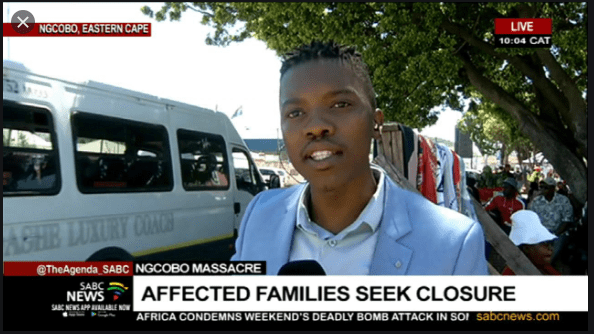
In an interview with Athule Joka who a journalist of the SABC as he shares his perspective on gender equality as a young journalist working in a newsroom. Joka was working with the Daily Dispatch before joining the South African Broadcasting Channel in the year 2018.
Questions
Q: How would you describe being a journalist in the new age of digitization?
A: I would say it is quite challenging and demands one to constantly alert of developing trends.
Gone are the day where a journalist will go to work and work the whole day to file a story later. Nowadays most people access news through digital platforms. Therefore, to avoid being scooped journalists are required to act swiftly to deliver content. For example, a normal day on the field could involve writing cue sheets for the anchor who will cross to you live. You are required to narrate what is happening live. Moreover, you will need to update social media pages on what is happening. As you correctly pointed out that news media houses are cutting down on staff therefore, journalists nowadays are expected to be all-rounders. From operating the camera, writing, reporting, editing, and feeding the news which is basically what I do on a normal day basis. It is demanding and takes its toll and most journalists today will have it difficult to have a balance between work and a social life.
Q: Do you feel there is a difference between journalists based on their sex and what motivates your response?
A: In all honesty I have not picked up any difference on journalists and their sexuality. In fact, currently I see most females in the company SABC, I work for moving up the ladder.
Q: The Gender links research show huge inequality between men and women at middle management level, as a senior news reader, what is your experience?
A: Like I said maybe in different companies it could be true but no in my experience. I have worked at the Daily Dispatch and SABC and I have seen equality in all the structures.
Ferial Haffajee was the first female editor of the Mail&Guardian publication in the South African history in the year 2004 and this is according to Dr Glenda Daniels in the 2018 State of the Newsroom report.
Gender Equality as a basic human right is important in our societies to achieve peace and sustainable developments. Empowerment of women has shown to yield productive results. Gender equality in the media is important not only to secure women’s right to freedom of expression but also to promote diversity and plurality in the media, which are essential if the media are to play their appointed role in democracy.
Q: From your point of view as a journalist, how is the representation of females in the journalism and media sphere today, particularly in the media house that you are working for? Do you feel like there is at least anything close to equivalence between men and women?
A: In my experience and in the SABC generally there is a lot of bright females working as journalists. They are contributing immensely to the world of journalism. In our SABC office in the Eastern Cape there are eight female reporters and four are permanent. It was seven of them, but three females have left the company recently to take positions elsewhere.
Q: Many media houses have been alleged to be closing, ones such as Associated Media Publishing together with around 43 radio stations. do you perhaps have any idea how this is going to impact gender equality in the newsrooms?
A: My view is that this would affect every journalist based on skill and not based on their sexuality.
Q: What issues do you guys consider when gender equality is concerned?
A: According to the policies of the company I work for it needs comply with equity. There are policies that speak to affirmative action which looks to address inequalities of the past. Females were not empowered in the past therefore there is a dire need for redress which the company is currently undertaking.
Q: Do you feel like the government of South Africa should do something about or for journalists who lose their jobs due to retrenchments and journalists being left wanting without jobs or income?
A: I strongly agree, the profession of journalism is a cornerstone of democracy. It is through media in which we can guard whether we are practicing freedom or not. Therefore, the grave situation of journalist losing their jobs and not being able to make an income needs to be fixed. Journalists are the vanguard of society and are the one who hold the government accountable.
Q: The Beijing Declaration and Platform for Action has been pushing for the advancement of female journalists in the media since about 23 years ago. Do you feel like there has been any progress with either one of the two strategies they came up with to ensure this advancement?
A: I would say there has been an advancement of women in the media sector. Such initiatives should continue to fight for equality in all spheres.
Q: Gender roles is a big factor when it comes to gender equality. Does gender equality mean identical roles for both men and women in the society?
A: In the past camerawork was mainly done by males. I have seen several young females coming in and doing that nowadays. I would say the thin line in gender roles is being reduced and people are doing same roles.
Water your plants while waiting for rain…
unknown
A waste of time and money
First years’ induction in the Nelson Mandela University’s South campus.
“Parents in poor homes sacrifice money they could have used to buy groceries for their homes, and they send their children to university early, that is all for nothing”.
Students arrive at the on-campus residences in about two to three weeks prior the academic program of the university commences. The main reason behind this early arrival is; for students to be inducted and familiarized with their relevant venues where they will be attending classes around the campus. At least that what the parents and residence managers think.
First year students who come in to reside in the newly named residences; Claude Qavane and Sarah Bartman are kept up all day and almost through the night singing “amagwijo” and are told that the “How to buddy” sessions that the university organizes for its first year students are for the weak and are not necessary. The house committee of the time simply does not introduce the students to the necessary information they need before the commencement of classes. It is this very reason that students struggle to find the venues for their classes when the academic program commences.
The question is whether the operation of these inductions is known by the residence managers and even the management of the university. If not, who has the responsibility to facilitate these programs and are they doing the job to full capacity?
In an interview with Asavela Magwa, a first year resident in Claude Qavane residence he said the orientation process could be changed to benefit first year students more. “Some of us come to the university with no knowledge about computers. We do not even know how to turn a computer on sometimes but nothing is done to change such situations” he said. it is not a secret today in the Nelson Mandela University that some first year students come to the university and are introduced to computer programs for the first time in their lives. Because the academic year has to move according to the university’s curriculum, some students get left behind still trying to adjust to the operating of computers and using especially the Microsoft office programs. In an ideal world, the introduction of students to university would be to get them familiar with the campuses they are going to be attending in and being shown different buildings and lecture halls according to their respective numbers. This is however not the case in the two houses formerly known as Xanadu and Melodi (XM) residences, now known as Claude Qavane and Sarah Baartman.
Twenty students were asked to give comments on a few questions on how they are finding the orientation style of the two houses (Claude Qavane and Sarah Baartman) and they gave their different views and ideas. “It is pointless to arrive early at res only to be made to sing all day, every day, for weeks even. Parents in poor homes sacrifice money they could have used to buy groceries for their homes and they send their children to university early, that is all for nothing”, Kuhle Tayi who is a first year student and resides in the Claude Qavane residence and attended orientation in 2019 said.
The Claude Qavane residence conducts surveys on what students feel needs to be changed on how the orientation program is conducted but none of the students’ views are ever taken into consideration and implemented in the following year’s orientation. The 2018 first year students were asked what they would like the house to change in the orientation process but the 2019 program was exactly the same as that of 2018.
Mr Tswane Sylvester, Claude Qavane residence manager said the house committees of the previous years have been reprimanded on how they conduct the orientation of first years as some students would report how they are made to sing and stay up in the late hours of the night. “It was left to the house committee to handle the orientation program though and we would like to believe that changes have been put in place to better the orientation program”, he said.
On an interview with the incoming “king” of the Claude Qavane residence in 2020, Lwandile Msimanga, he said it was not easy for them as the committee of the house to decide what they needed to change exactly but they have drawn a few ideas and put them on paper. “One of the key things that we are looking to do is to do away with the orientation that is based solely on students singing all day and night. We want to introduce a more interactive approach and bring in ideas that will go in line with the new name of the residence; Claude Qavane which has a very strong political resonance to it”, Msimanga said.
The new orientation approach is said to have three phases that will help advance the change that the 2020 committee will be trying to implement come 2020. The phases include
The Claude Qavane residence 2020 committee wishes to implement at least 80% of their ideas by January 2020. Msimanga said for any of these ideas to be fully implemented and functional, certain gaps would have to be bridged between the residence manager and the committee of the house. “In as much as there is the separation of powers, the residence manager will need to be involved more in activities that the house usually holds. We of course do not expect a man with a wife and kids to attend party-styled events with loud music but the more formal ones like the opening and closing functions of the house” Msimanga said. He also added that the residence manager, Mr Tswane Sylvester must also be the one to welcome students into the residence and take them through the school’s policy and code of conduct.
The year 2020 looks promising for the Claude Qavane residence as the incoming committee seems to have nothing else but good intentions for the house.

 Victor Phemba